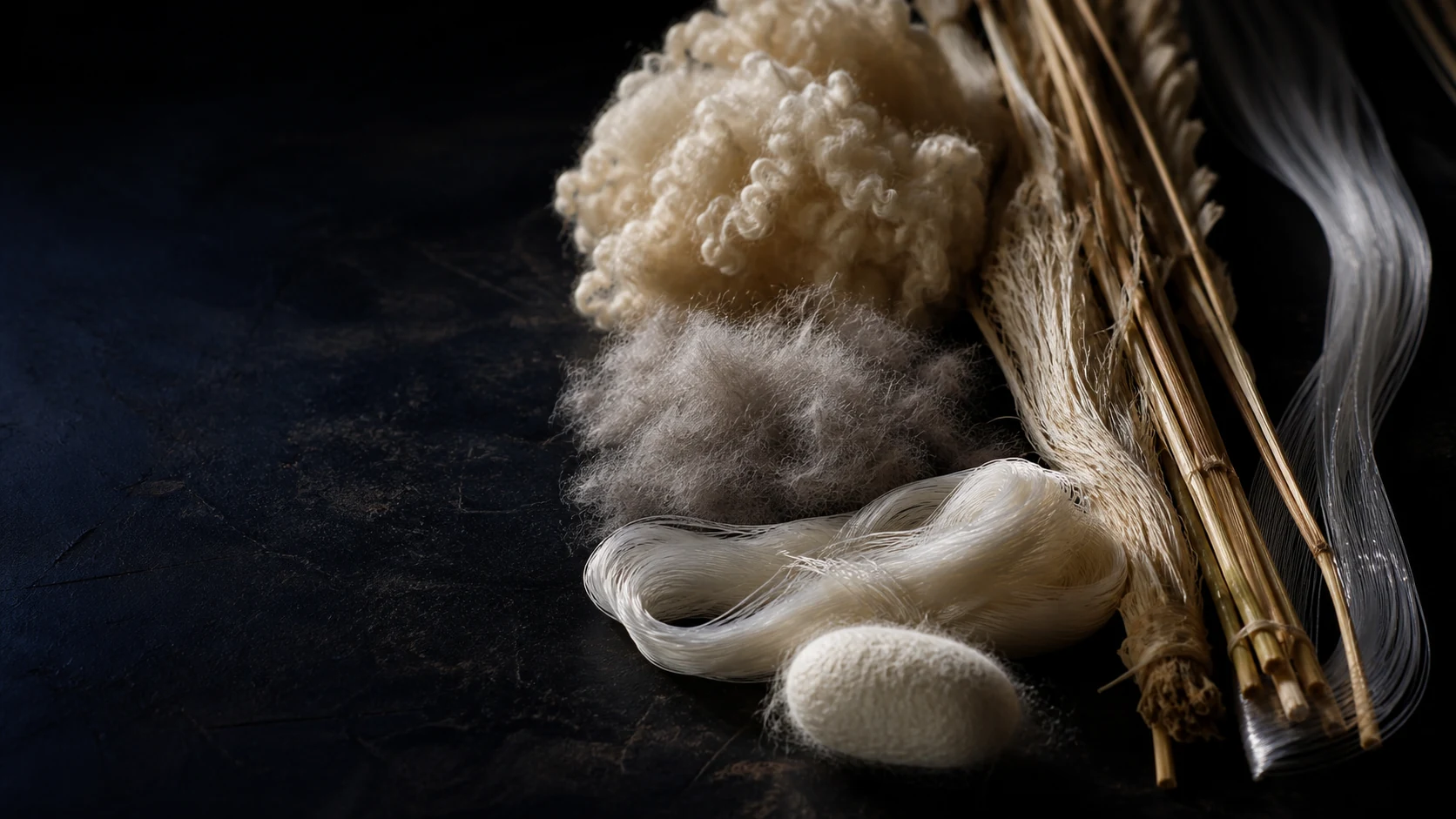
A material library of wool, fine down, silk and flax fibres arranged before cloth is made

The Material Library / Fibre Library

Every cloth beginswith a fibre decision.

Nature gives each fibre its character.

We engineer how those characters work together.

See wool respond

Wool lends you a little time.

Wool naturally holds invisible moisture drawn from the air.

Water has a high specific heat capacity—it changes temperature slowly.

Comfort lingers while the cloth finds its new balance.

Figure 01 / a short thermal memory

The fineness lens

What bends awayis less likely to prickle.

Fineness changes how a fibre meets the skin. It does not decide the worth of the fibre.

16.5 μm

A finer fibre yields more readily at contact.

28.5 μm

A broader fibre resists bending and asks for distance, structure or an outer layer.

1 micrometre = one thousandth of a millimetre

How we measure

Micrometres provide one readable visual language, but the measured object still matters: wool underfibre, silk brin, elementary flax fibre or engineered filament. Shape, surface, yarn and finish complete the sensation.

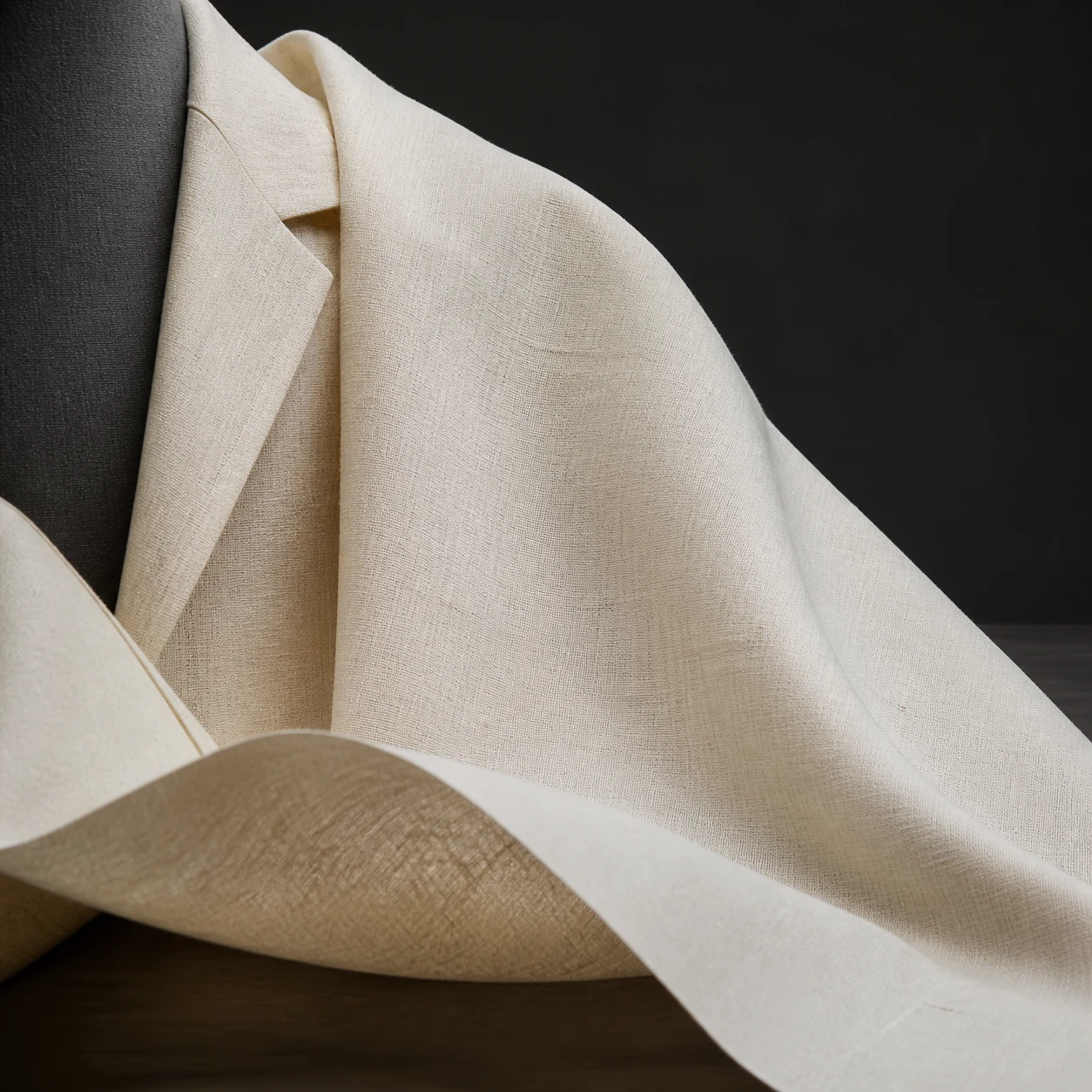
Concept study of lightweight tailoring cloth holding a clean line while moving fluidlyDirectional cloth study / verify against the approved fabric

Fibre engineering / one worked brief

Summer tailoringthat keeps its line.

We begin with what the wearer needs—not with a prestigious list of ingredients.

Dry freshness+Recovery+Glide
Woolspring
Crimp compresses · then returns
Linenstructure
Bast bundles hold their line
Silkfluidity
Continuous brins carry light
Intended experienceCool-feeling tailoring with movement and shape.

The method is public. The developmental recipe remains private.

Meet the fibres

Six material worlds.Read by what they make possible.

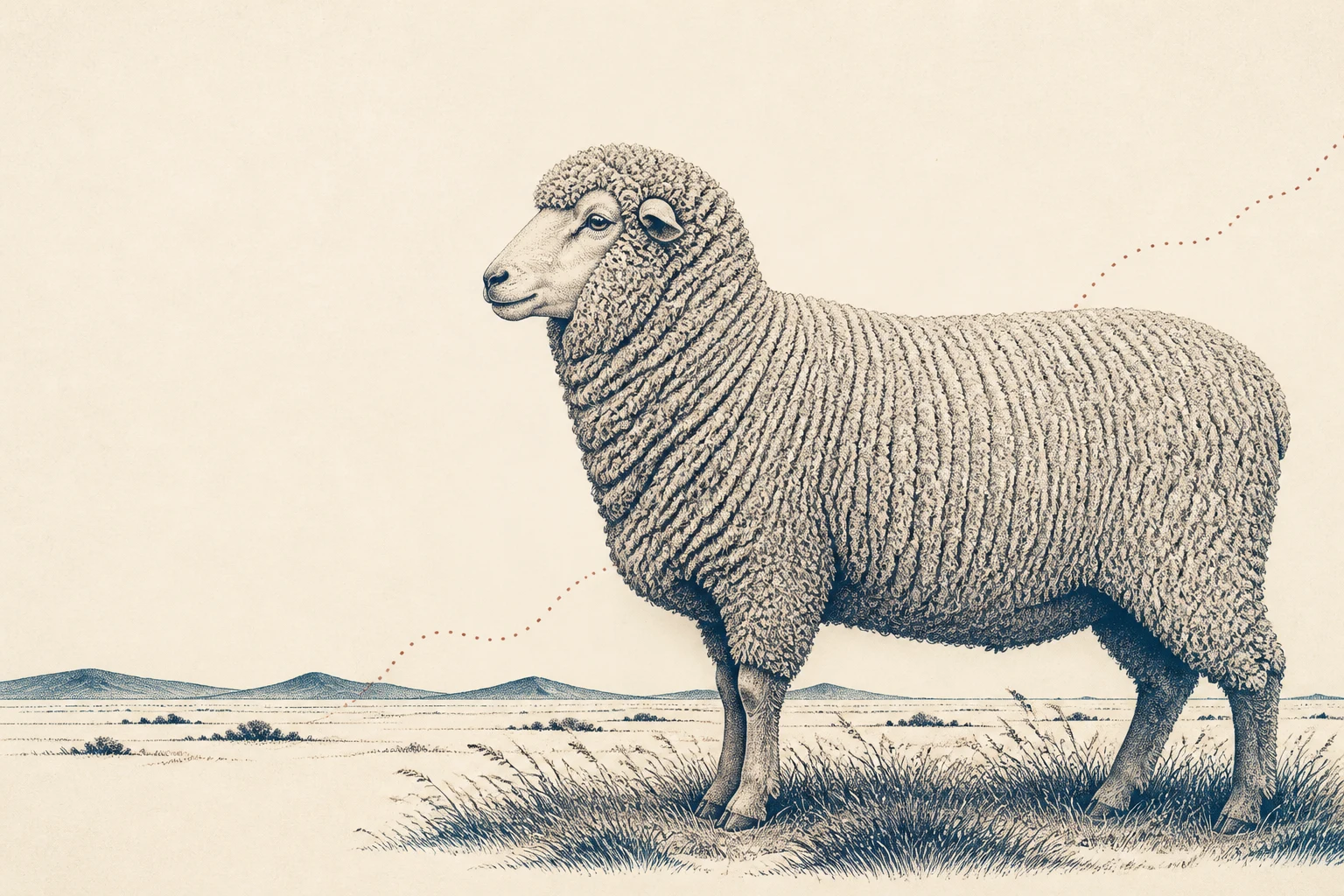
Engraved Australian Merino ewe in grassland with a restrained route line

01 / Wool

One natural system.A spectrum of purposes.

Australian wool is the foundation of the library. Diameter changes how the fibre meets skin; crimp, yarn and construction decide what it becomes.

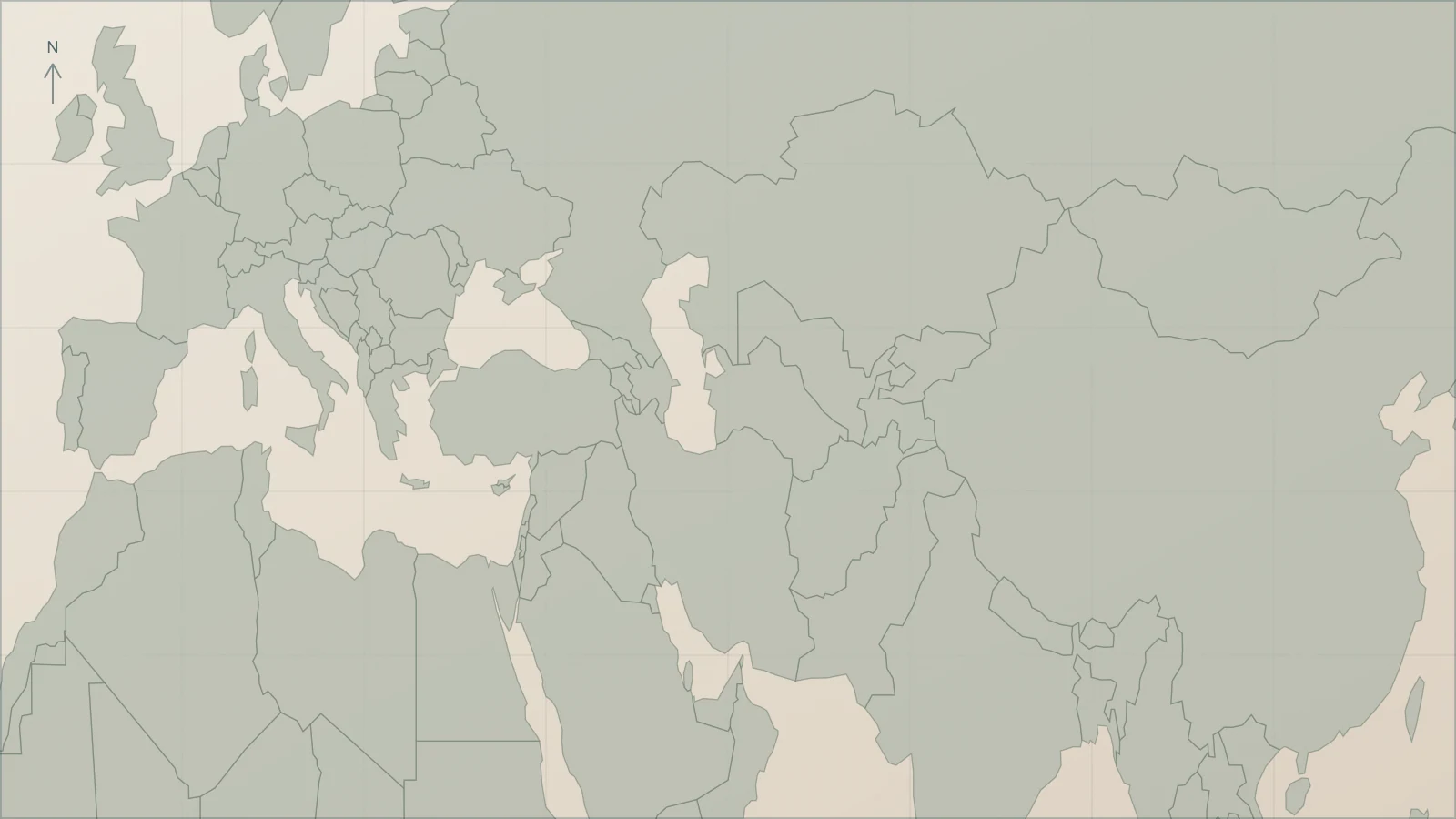
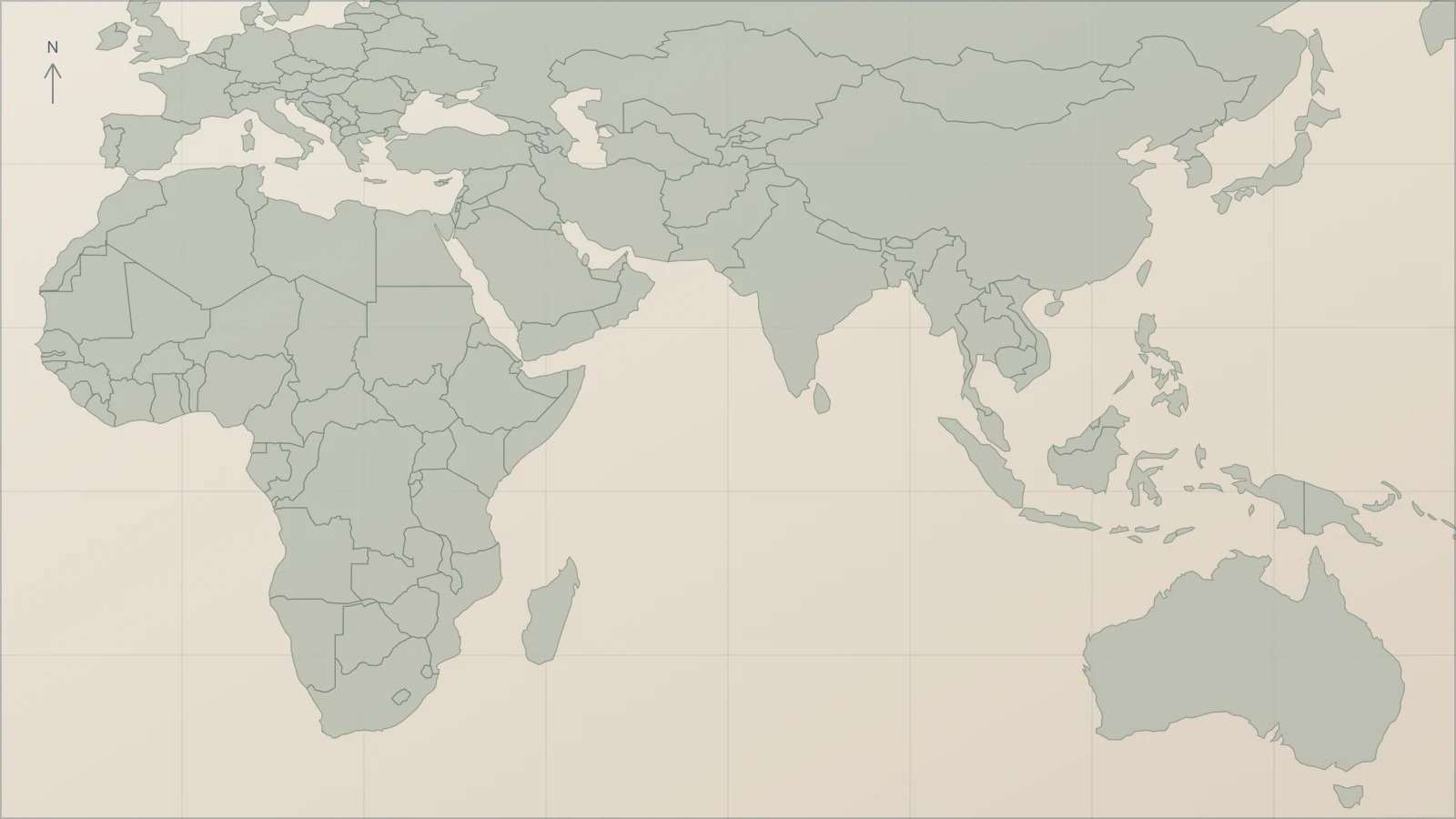
Origin atlas / Australian Merino fleece

Wool / movement, lineage and commerce

A fibre bred across continents.

Spanish Merino lineage moved through the Cape before a founding flock reached Port Jackson. Australian wool then entered English commerce. The line describes documented history—not the origin of every Australian wool type.

Documented historical movement
  1. 01Port Jackson

    Twenty-six Merinos were brought from the Cape to the young Australian colony.

  2. 02First sale in England

    The first bale of Australian wool was sold in England.

  3. 03Commercial shipment

    The first commercial shipment of Australian wool reached England.

How to read this mapHistoric movement and breeding lineage are not present-lot traceability. Today’s property, breed, care and lot evidence sit in the wool record.

Wool, up close

Nature built the levers.The cloth decides the result.

01

Crimp

Wool’s natural wave opens under strain and moves back towards its earlier form.

On the body
Ease in motion, resilient drape and fewer hard-set creases.
TIWC can tune
Tune spring, fluidity and recovery through fibre selection, yarn and construction.
02

Still-air loft

Crimp spaces fibres apart, allowing a cloth to hold pockets of still air.

On the body
Insulation through airy volume rather than simple heaviness.
TIWC can tune
Build or restrain loft through spinning route, density and finish for the intended layer.
03

Moisture buffer

Wool’s keratin interior can take up and release water vapour as conditions change.

On the body
A steadier next-to-skin humidity and temperature experience.
TIWC can tune
Create season-spanning comfort; the cloth construction still controls transport.
04

Controlled felting

Wool’s cuticle scales interact under moisture, heat and friction.

On the body
When deliberate, fulling creates density, tactile surface and protection from moving air.
TIWC can tune
Exploit the response for texture and body—or control it through treatment and finish.

The micron installation

A wool fibre is a fraction of a human hair.

Scroll through six Australian wool diameters. The reference hair stays fixed; only the measured wool diameter changes.

01 / 06

Ultrafine Australian Merino

16.5 μm

Near-skin intimacy

Light, close-contact layers where finesse and very low apparent bulk serve the style.

One shared magnificationHuman hair / selected wool
Illustrative human hair70 μm
Ultrafine Australian Merino16.5 μm
24%of the reference hair’s diameterApproximately 1/4.2 as broad

Human hair varies. We use 70 μm as a familiar illustrative reference; both specimens are magnified on the same scale.

Australian production contextSpecialist fine-wool Merino flocks

Breeding, shearing timing and nutrition are managed around even, sound fibre growth.

Wool-led production
AWTA-tested raw-wool lotStation record carries breed, place and care
Read the shared Wool record
Source
Australian Merino for the ultrafine-to-medium grades; selected strong and broad Australian wool for 24.5 and 28.5 μm.
Fibre-bearing part
The shorn body fleece, after lower-value leg and belly wool is separated.
Historic region
The Merino breed emerged in the Iberian Peninsula. The modern source story here is Australian.
First secure commerce
Spain’s Council of the Mesta formalised a commercial Merino-wool system in 1273. Merino reached Australia in 1797; Australian fleece was sold in England by 1807.
Amritsar
A long-standing centre of wool processing, weaving and manufacture: the place of interpretation, not the raw fibre’s origin.
Verification
AWTA testing carries the measured raw-wool data. The linked station and supply records carry breed, place and husbandry.
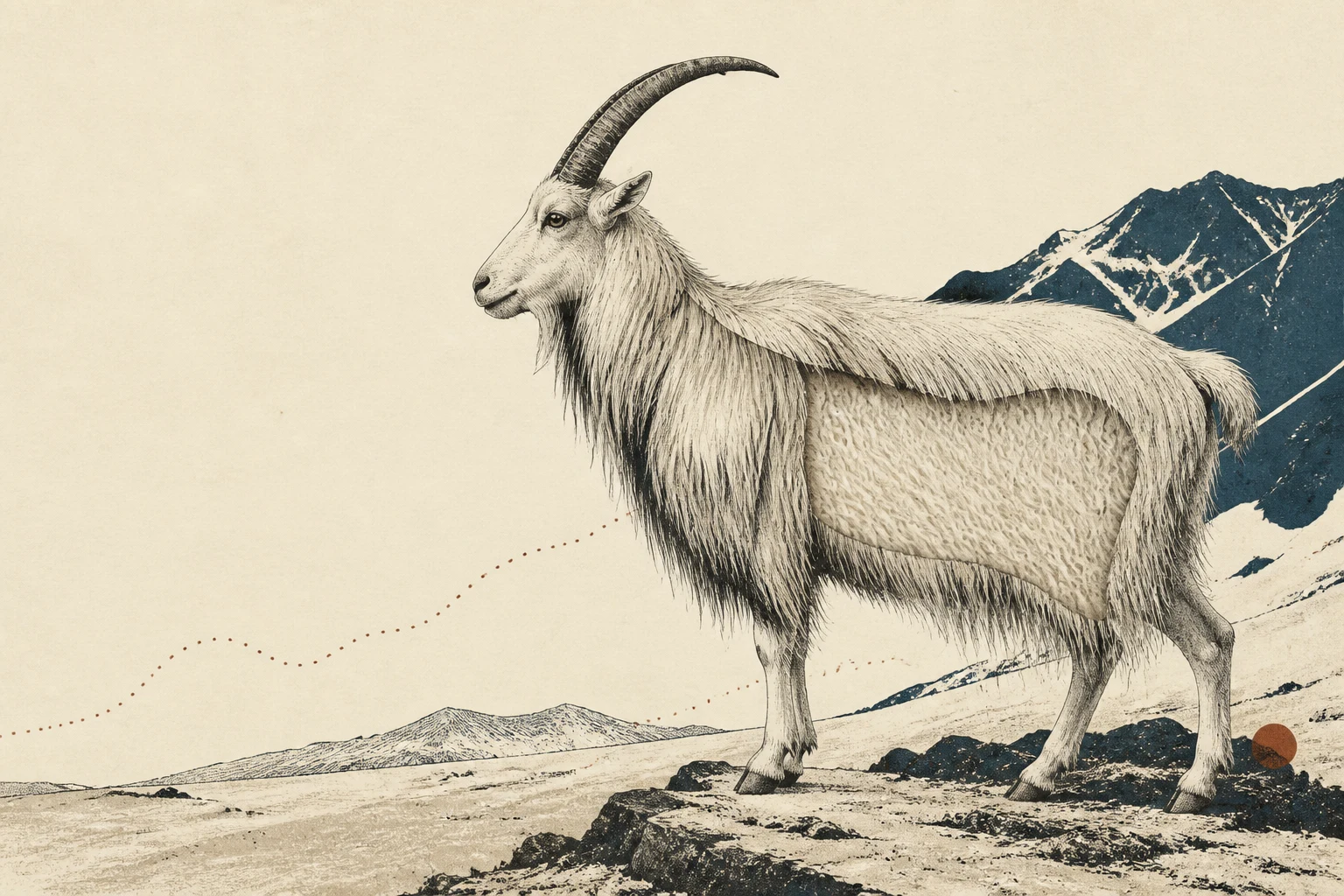
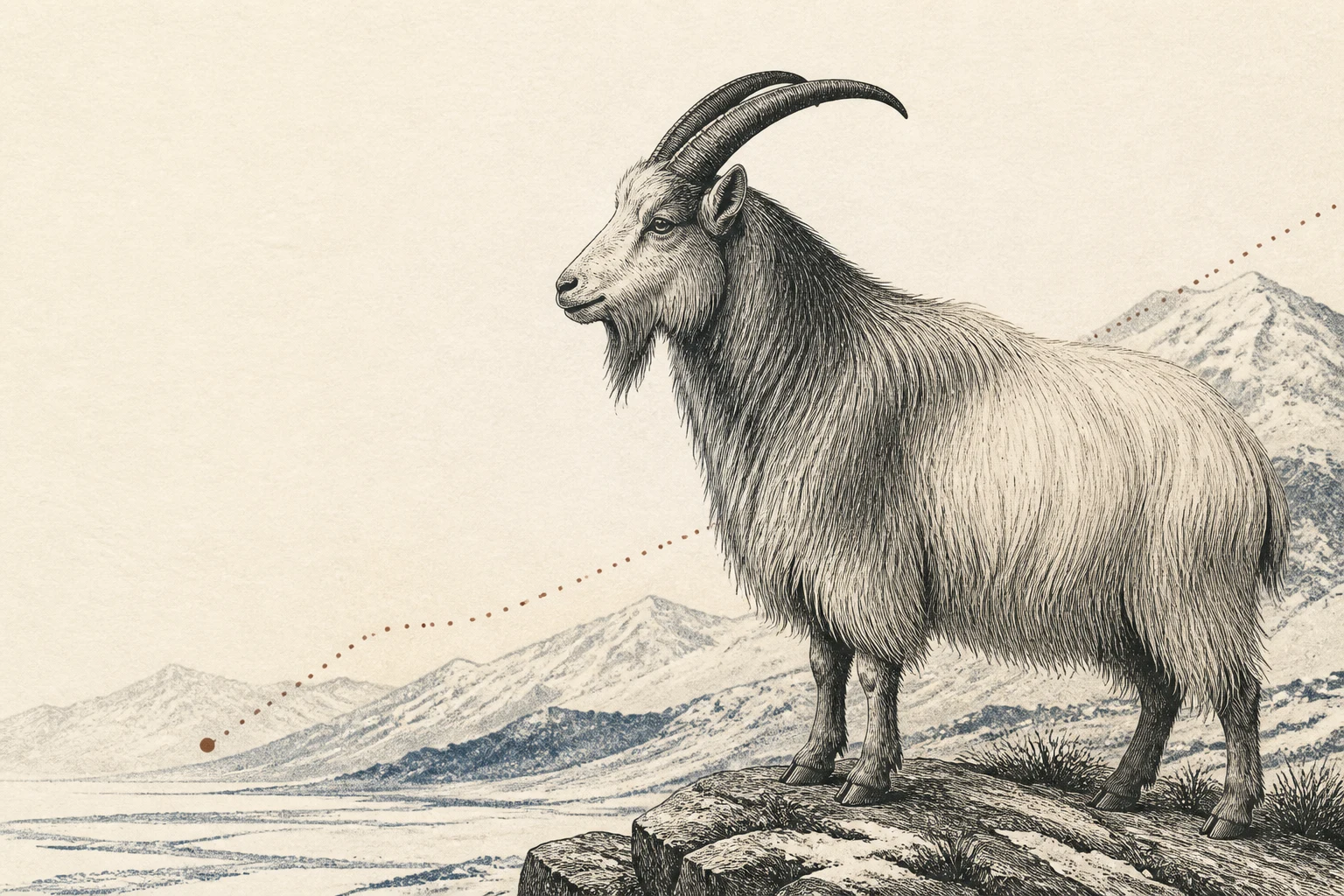
Engraved cashmere goat on a cold Asian plateau with a restrained route line

The coat beneath the coat

  1. Verified high-plateau lot
  2. Seasonal undercoat collection
  3. Amritsar / cloth design
Origin atlas / source and material pathThe approved fibre image remains; documented history moves onto the map.

02 / Fine, dehaired goat undercoat

Cashmere

A soft halo with warmth held close.

Where it beginsHigh plateaus of Asia · Kashmir’s shawl culture · world
Fineness≤19 μmLegal ceiling · tested lot mean required

Cashmere / fibre movement and naming history

Named by the shawl that carried it west.

Historic high-altitude goat down moved into Kashmir’s shawl culture; finished shawls later carried the name into European fashion. This does not make Kashmir the source of every modern cashmere lot.

Documented historical movement
  1. 01Akbar’s court

    Kashmir shawls formed part of elite Mughal dress and exchange.

  2. 02European fashion

    Kashmir shawls became fashionable in London and Paris.

  3. 03The name travels

    European demand helped cashmere become a material word far beyond Kashmir.

How to read this mapThe dotted lines join two related histories—fibre into Kashmir, then shawls into Europe. They are not one authenticated modern supply chain.

Fine undercoat

Fine, naturally curved secondary fibres bend readily and form an airy structure.

What you noticeLow-prickle contact and close warmth with little apparent weight.
What we design withA precise way to soften tailored authority or build enveloping layers.

Natural halo

Short, fine fibre ends migrate subtly towards the cloth surface.

What you noticeA soft-focus surface and tactile intimacy rather than a hard polished face.
What we design withFibre length, yarn twist and finish tune halo against pilling and abrasion.

Dehairing

Coarse guard hairs are mechanically separated from the fine underdown.

What you noticeClean dehairing removes the hard interruptions that compromise a soft surface.
What we design withMean diameter, its distribution and residual coarse fibre must be read together.
Read the fibre record
Source
Cashmere-producing domestic goats, Capra aegagrus hircus.
Fibre-bearing part
The fine winter undercoat beneath the coarse outer guard hair, separated by dehairing.
Historic region
High plateaus and cold deserts across Asia, including Mongolia, northern and western China, Tibet and parts of Central Asia.
First secure commerce
An English record identifies an imported Kashmir shawl in 1767; European demand and the name cashmere spread in the late 18th and early 19th centuries.
Present-tense rule
The name comes through Kashmir’s renowned shawl culture. It does not establish that a present cashmere lot came from Kashmir or India.
Naming rule
Cashmere is the recognised fibre name. Identity, source and the tested lot mean must support the claim.
Measurement note

The strict US definition also controls coarse-fibre content and diameter variation. Nineteen micrometres is a ceiling, not a typical value or softness guarantee.
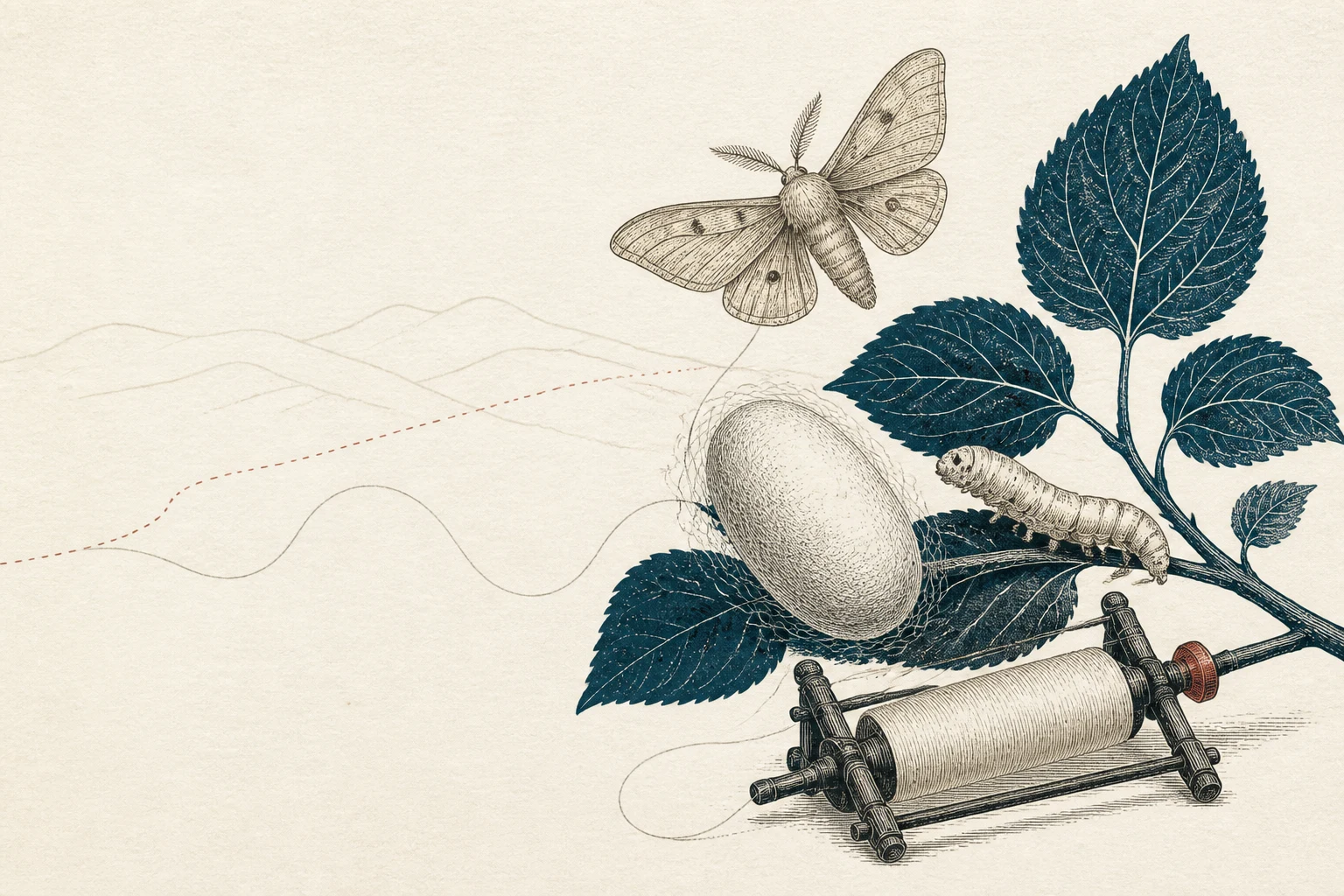
Engraved mulberry silkworm, cocoon, moth and traditional hand reel linked by one filament

One continuous natural filament

  1. Mulberry leaf / silkworm
  2. Cocoon / filament reeling
  3. Amritsar / blend design
Origin atlas / source and material pathThe approved fibre image remains; documented history moves onto the map.

03 / A continuous natural protein filament

Silk

Light that moves when the body moves.

Where it beginsAncient China · South Asian wild silks · present lot
Fineness7–14 μmOne degummed fibroin brin · conventionally denier / dtex

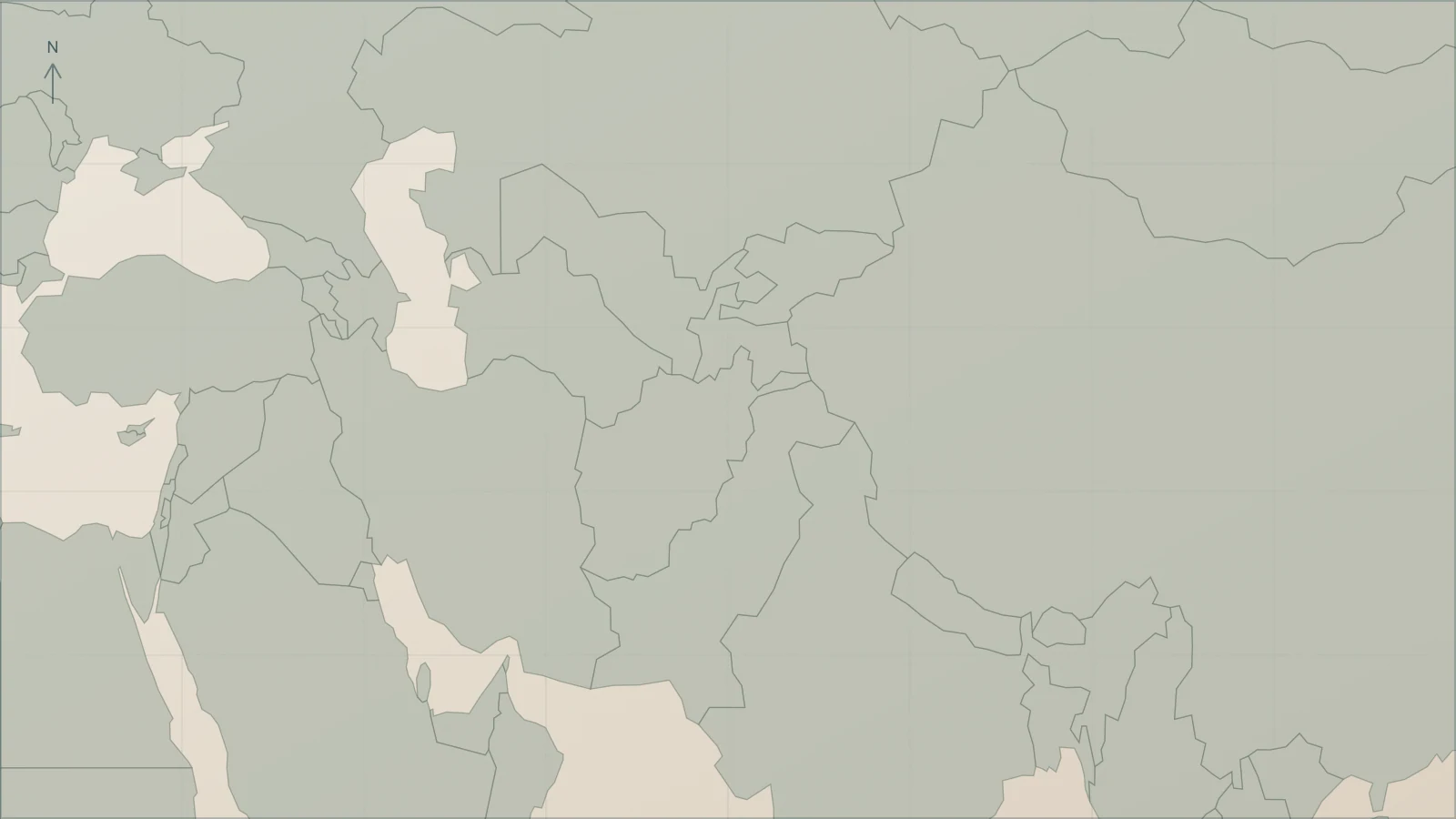
Silk / a network of exchanges

Not one road. Many exchanges.

Silk moved through a network of cities, merchants and cultures across Eurasia. The map shows a legible route spine and an Indian branch—not a single journey made end to end.

Documented historical movement
  1. 01Long-distance exchange

    Trade in silk and other goods expanded substantially across Eurasian networks.

  2. 02Chang’an–Tianshan corridor

    The great corridor flourished through successive cultures and trading centres.

  3. 03A living network

    The routes remained major channels for goods, ideas, skills and belief.

How to read this mapHistoric exchange is separate from the species and provenance of the silk in a present cloth. Those facts travel with the supplied lot.

Continuous filament

A cocoon can yield a very long filament with fewer projecting ends than a staple yarn.

What you noticeA smooth, clean surface and fluid movement with low apparent bulk.
What we design withA way to bring glide and clarity to a blend, or to stabilise a fine construction.

Living lustre

Silk’s irregular, often triangular cross-section redirects light rather than reflecting one flat glare.

What you noticeLuminosity appears and recedes as the cloth turns.
What we design withYarn, weave and finish can tune light from restrained glow to visible sheen.

Strength at fineness

Ordered protein structures give a very fine filament meaningful tensile strength.

What you noticeA cloth can feel light and refined without looking insubstantial.
What we design withUseful where delicacy of appearance needs structural support; the finished cloth still requires testing.
Read the fibre record
Source
For mulberry silk, the domesticated mulberry silkworm, Bombyx mori. Other silks come from other species.
Fibre-bearing part
Two fibroin brins secreted by the larva’s silk glands and joined with sericin as it spins its cocoon.
Historic region
Domesticated mulberry sericulture developed in ancient China; South Asia also had indigenous wild-silk knowledge by the third millennium BCE.
First secure commerce
Under the Han dynasty, 206 BCE–220 CE, silk is securely recorded as trade good, tribute, tax payment, salary and medium of exchange.
Present-tense rule
The exact species and present source must follow the supplied silk. Amritsar’s role is transformation, not a universal raw-silk origin.
Naming rule
Silk is the recognised fibre name. Species and present source are declared for the actual cloth.
Measurement note

Two brins form the cocoon filament. Degumming and irregular cross-section change what is measured, so the basis always travels with the number.

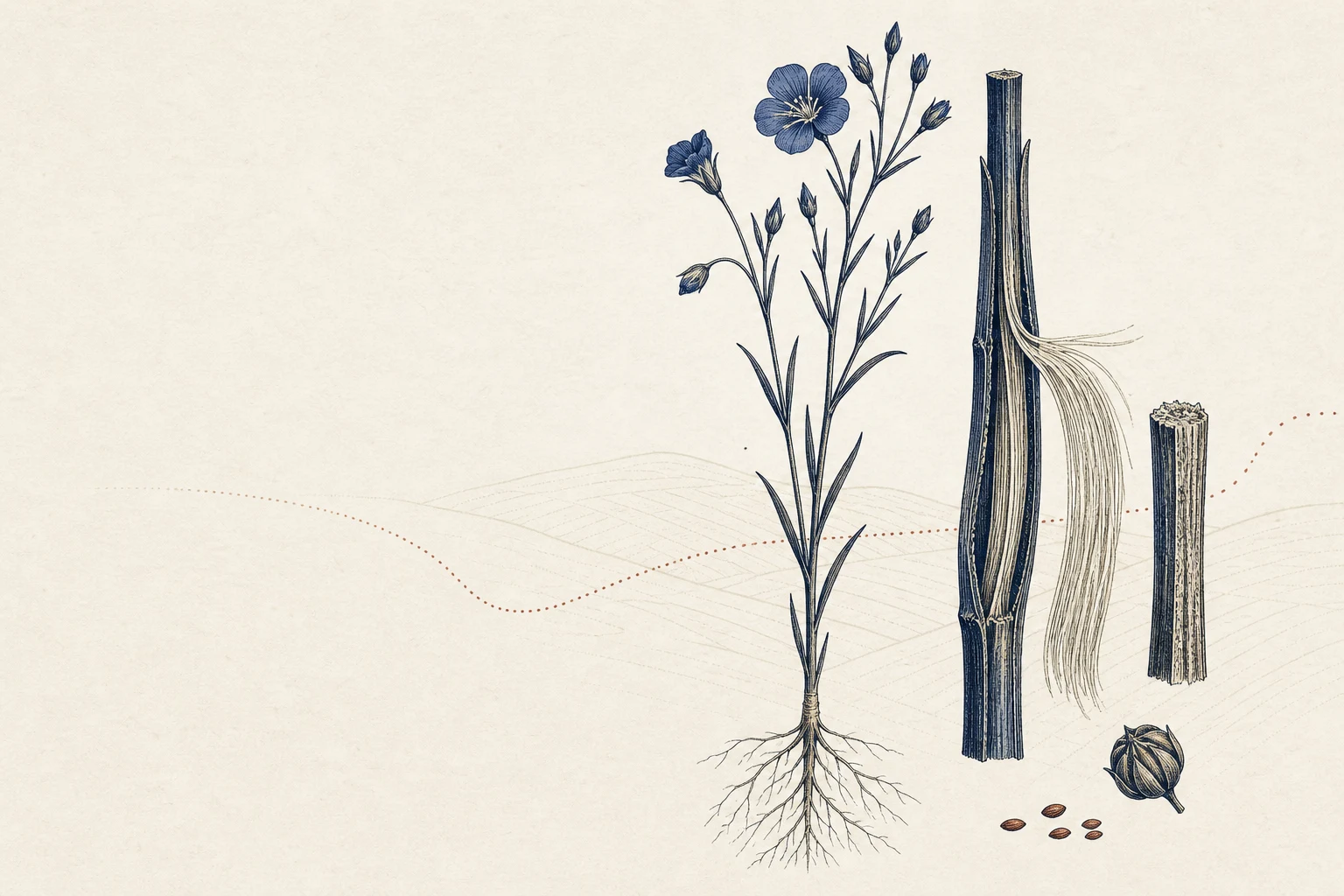
Engraved flax plant and opened stem revealing long bast-fibre bundles

Long strength inside the flax stem

  1. Verified flax field
  2. Stem / bast-fibre separation
  3. Amritsar / seasonal tailoring
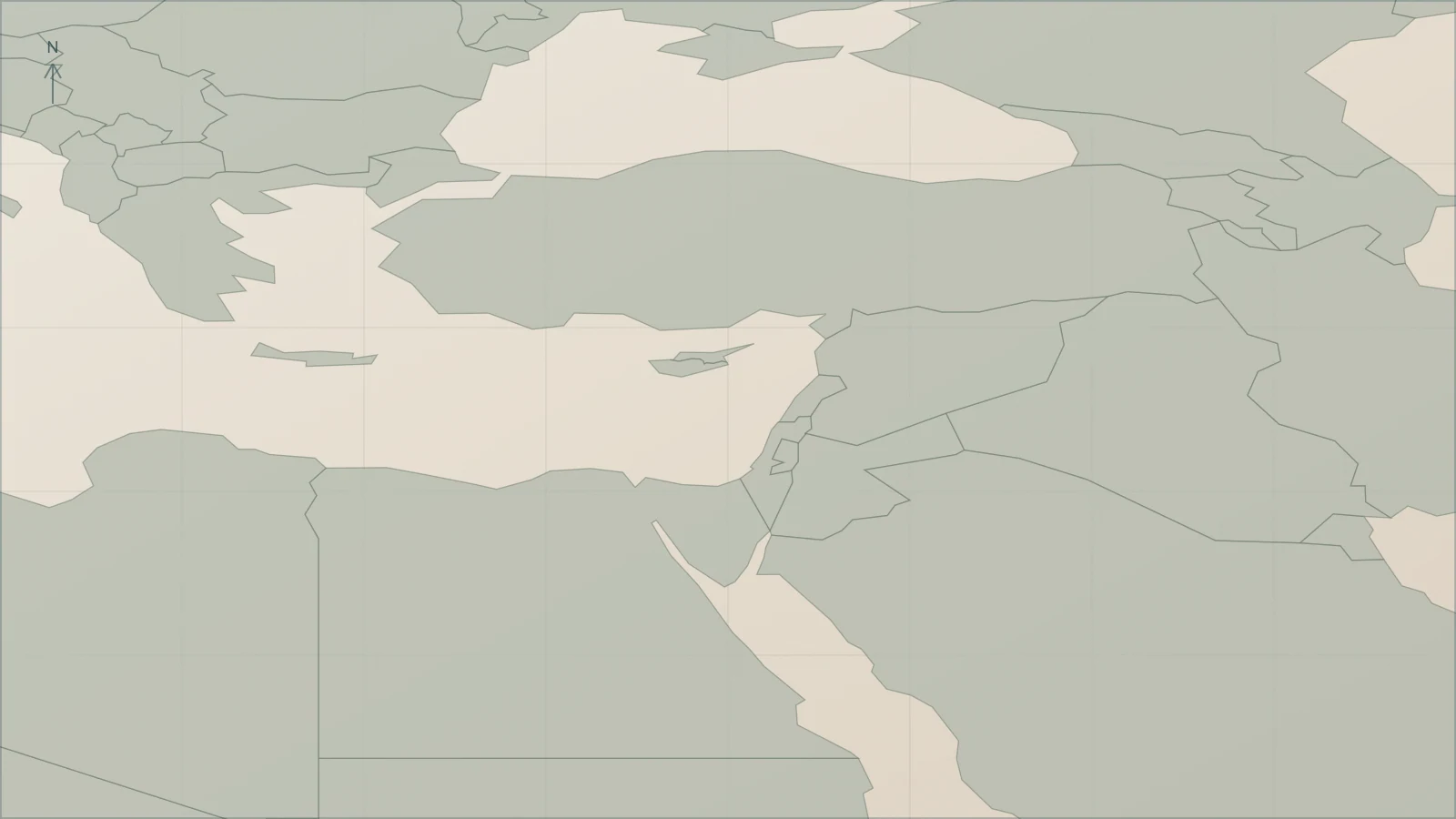
Origin atlas / source and material pathThe approved fibre image remains; documented history moves onto the map.

04 / The bast fibre of the flax plant

Linen

A dry freshness that holds a line.

Where it beginsFertile Crescent · Egypt · verified present field
Fineness10–40 μmElementary bast fibre · conventionally linen count / lea

Linen / cultivation and cloth geography

From flax landscape to cloth culture.

There is no defensible single linen caravan route. This map follows an evidence-based geography of flax cultivation and early cloth culture, ending with Mediterranean exchange.

Documented historical movement
  1. 01Cultivated flax

    Evidence places flax cultivation at Kom W in Lower Egypt.

  2. 02Linen industry

    Linen weaving had become a staple Egyptian industry.

  3. 03Material continuity

    Surviving cloth and written records show highly developed linen value and use.

How to read this mapThe dotted line is a cultivation-and-cloth history, not a reconstructed single shipment. Present field and supplier geography remain lot-specific.

Bast structure

Aligned cellulose microfibrils give the long stem fibres high axial stiffness.

What you noticeA dry, crisp presence that tends to sit away from the body.
What we design withA counterpoint to wool’s loft: useful for sharpening silhouettes and opening a warm-weather register.

Moisture response

The hydrophilic cell wall takes up moisture while bundle pathways can help it move through an open cloth.

What you noticeA fresh, dry perception when construction also allows air and moisture to travel.
What we design withA lever for warm-season comfort; fibre content alone cannot guarantee breathability.

Limited recovery

Flax extends and springs back less readily than wool.

What you noticeThe cloth records movement as crease and texture rather than hiding wear.
What we design withBlending with wool can retain linen’s visual language while adding resilience and a longer wearing season.
Read the fibre record
Source
Cultivated flax, Linum usitatissimum.
Fibre-bearing part
Long cellulose bast-fibre bundles between the stem’s outer skin and woody core.
Historic region
Cultivated flax emerged in Southwest Asia’s Fertile Crescent; Egypt became one of its great historic textile cultures.
First secure commerce
By Egypt’s Old Kingdom, c. 2686–2181 BCE, written lists distinguish linen qualities—evidence of an organised economic value system.
Present-tense rule
The present field and supplier geography must be stated per lot. There is no defensible foundational Amritsar origin to borrow.
Naming rule
Linen is the recognised textile-fibre name; flax is used in botanical and raw-material context.
Measurement note

A technical flax fibre is a bundle of elementary fibres. The smaller number describes one elementary fibre, not the whole bundle a spinner handles.

Engraved Changthangi goat with its fine winter-insulation layer revealed on the Changthang plateau

The winter layer closest to skin

  1. Changthang plateau
  2. Leh / mountain passage
  3. Kashmir craft culture
Origin atlas / source and material pathThe approved fibre image remains; documented history moves onto the map.

05 / A heritage name for fine goat down

Pashm

Warmth that seems to weigh almost nothing.

Where it beginsChangthang · Kashmir · Amritsar
Fineness12–16 μmMean fibre diameter · source-specific

Pashm / high-altitude passage

The high-altitude path of pashm.

The story begins with the winter undercoat of the Changthangi goat, then follows the mountain passage through Leh into Kashmir’s shawl culture and later regional making in Amritsar.

Documented historical movement
  1. 01Trade formalised

    An agreement regulated western Tibetan pashm moving through Ladakh to Kashmir.

  2. 02Control of passage

    The pashm trade was one motive in Kashmir’s annexation of Ladakh.

  3. 03A protected craft name

    Kashmir Pashmina was registered as an Indian geographical-indication handicraft.

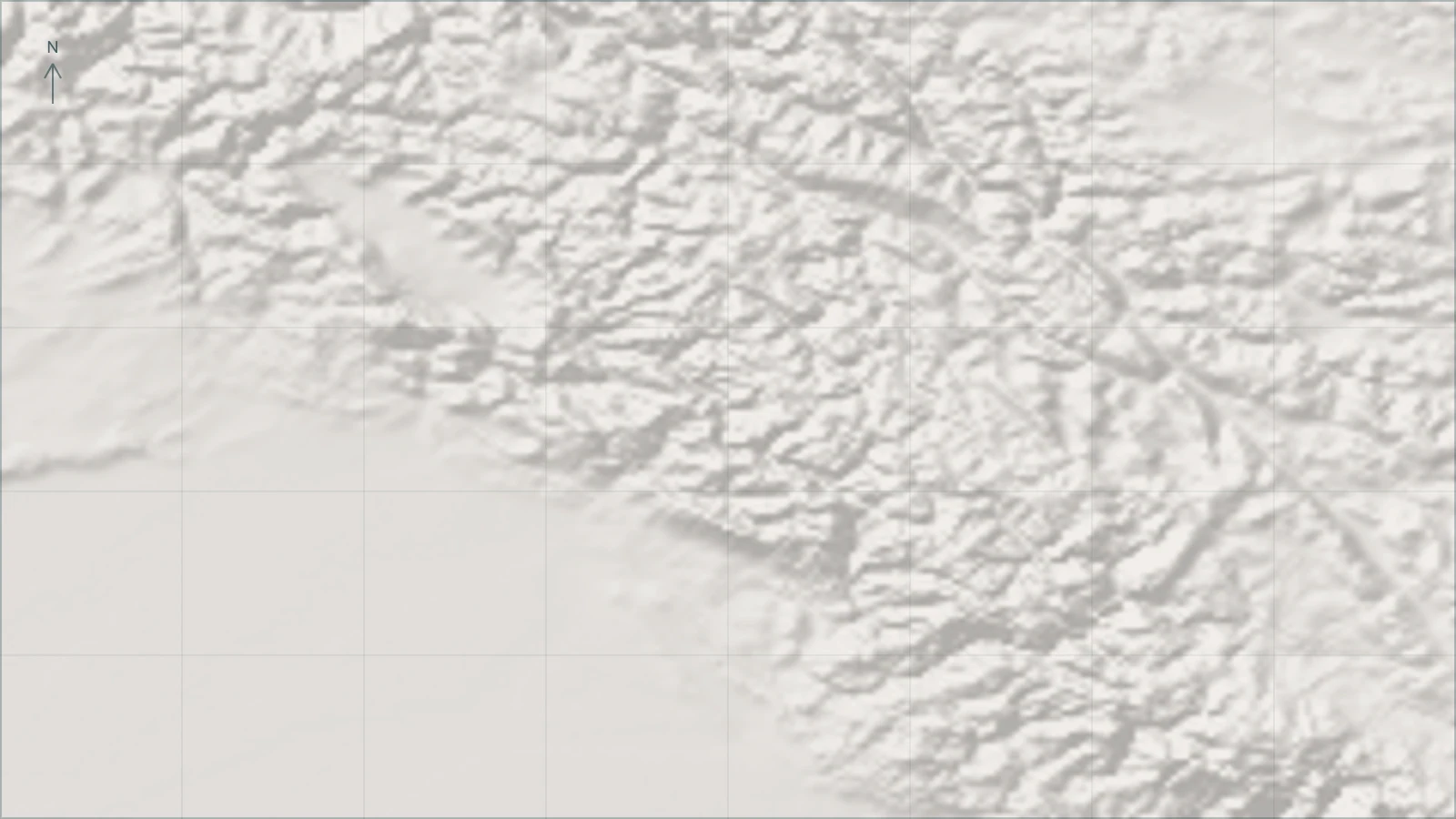
How to read this mapThe relief shows terrain without asserting disputed modern borders. ‘Kashmir Pashmina’ is used only when a finished product qualifies for that protected name.

Warmth without weight

The Changthangi goat grows an exceptionally fine winter-insulation layer closest to its skin. Its curved fibres bend readily and create space for still air.

What you noticeA quiet, enveloping warmth with almost no sense of burden.
What we design withWe preserve that close-to-skin character through authenticated fibre selection, proportion, yarn and construction.
Read the fibre record
Source
High-altitude cashmere-producing goats; in Ladakh’s pashm tradition, the Changthangi goat.
Fibre-bearing part
The fine secondary winter undercoat beneath the coarse protective guard hair.
Historic region
Changthang, Ladakh for authenticated Ladakh pashm; Kashmir for the historic spinning and weaving culture.
First secure commerce
Pashm-cloth production was established in Kashmir by the mid-15th century; Mughal records securely document wider circulation from the late 16th century.
Present-tense rule
Amritsar later became an important shawl-making and trading centre. That history does not prove the source of a present fibre lot.
Naming rule
Pashm is an editorial heritage heading. Product composition uses the legally recognised fibre name and verified percentage.
Measurement note

The 16 μm ceiling belongs specifically to qualifying Kashmir Pashmina GI goods. It is not a universal promise for anything called pashm.

06 / Performance exception

Specialitysynthetic fibres

Not a substitute for natural material character. A precise tool used only when a measured performance need requires it.

Engineered geometry

Fibre geometry, fineness and surface can be specified around one mechanical or moisture function.

What the wearer noticesThe value is an outcome—mobility, drying or protection—not technology as decoration.
House ruleState the exact material, intended function and finished-cloth test for every approved fabric.

Abrasion support

A selected speciality fibre can add resistance where repeated rubbing is part of the wearing brief.

What the wearer noticesHigh-contact areas may retain function and appearance for longer.
House ruleA narrow tool for demanding use where the natural-fibre system cannot meet the brief alone.

Stretch recovery

A deliberately elastic component can extend with movement and return towards its earlier dimensions.

What the wearer noticesA closer garment can move with the body and recover its line.
House ruleUse the minimum purposeful amount and prove the outcome in the actual fabric.
Read the fibre-family record
Scope
A broad family of purpose-engineered fibres, grouped here by the job they perform rather than by one origin story.
Fibre form
Construction, cross-section and whether a fibre is supplied as a continuous or cut form vary with the actual material and supplier.
Selection rule
No addition is justified by novelty alone. It must answer a measurable requirement the natural-fibre system cannot meet by itself.
Measurement
Diameter, linear density and performance data follow the actual fibre used; there is no useful family-wide fineness claim.
Evidence
The finished cloth must prove the intended improvement through the relevant wear and laboratory tests.
Disclosure rule
Every approved cloth declares the exact legally recognised fibre names and percentages. The public library stays generic until that cloth exists.

The governing rule

Origin creates context.Properties create possibility.The cloth must create proof.

Historical origin never substitutes for the provenance of the current lot.

Fibre potential never becomes a guaranteed fabric outcome without testing.

Interim SKUs remain private. Public stories end in approved cloth and the Style Edit.

Research and naming sources
Woolmark · Merino gradingFTC · Cashmere definitionIP India · Kashmir PashminaSmithsonian · Silk historyUCL · Linen historyNIST · Human-hair scale referenceNational Museum of Australia · Merino historyUNESCO · Chang’an–Tianshan corridorGovernment of India · Pashmina Wool of LadakhNatural Earth · Public-domain map dataISO 16533 · Textiles under humidity changeTextile Research Journal · Dynamic moisture bufferingErgonomics · Clothing in a transient environment