

The Living Mill · Amritsar
A living mill.A new language of wool.
In a city shaped by pashmina, silk and trade, OCM’s century-old mill composes Australian Merino into cloth for the next chapter of luxury.
A city made by movement and material
Before OCM made cloth here,
material was already part
of the city’s language.
01 / Amritsar
Amritsar was founded with trade at its heart. It grew along the Grand Trunk Road, part of routes connecting South and Central Asia; historical records trace pashm through the city, while its markets carried silk, shawls and woollen cloth.
- 1574
- City founded; traders invited to establish its first markets
- Route
- Grand Trunk Road into the wider Silk Road network
- Material
- Pashm, silk, shawls and woollen cloth in the city’s history
02 / The living mill
A century-old factory.
Still at work.
The house story begins in 1907. OCM established its Amritsar manufacturing home in 1924, and production continues on the historic estate today. This is not heritage preserved behind glass. It is knowledge kept alive by making.
- 1907
- Recorded house origins
- 1924
- Amritsar manufacturing home
- Today
- Integrated dyeing, spinning, weaving and finishing
Luxury designed to be felt
The hand knows first.
03 / Our standard
“Felt” is physical and emotional: the first reading of cloth by the hand, its behaviour on the body, and the human continuity behind its making. Every fibre, blend, construction and finish must earn that feeling.
- Hand
- Drape
- Warmth
- Ease
- Recovery
- Quiet beauty
04 / The odyssey of wool
From pasture to atelier.
Every passage changes the hand.
Australian Merino travels from open pasture through independent measurement, across the Indian Ocean and into Amritsar—where it is prepared, coloured, composed with silk or linen, spun, woven or knitted, and cut into silhouette before reaching European design rooms. Scroll forward to follow the transformation; scroll back to retrace it.
Begin the odyssey Scroll down to advance · scroll up to retraceOur wool begins in Australia.
Across the seasons, Merino sheep graze open pasture as their fleece grows. At shearing, that annual fibre becomes the mill’s first material decision—selected for fineness, softness, resilience and warmth.
100% Australian wool test authority certified.
OCM specifies Non Mulesed Australian Merino for the collection, sourced from flocks shaped by generations of breeding for fibre fineness and consistency. AWTA Ltd independently supervises sampling and issues Test Certificates for specified measurements of each purchased sale lot. OCM’s purchase and allocation records establish Australian origin and connect those lots to the fabric order.
Australian Wool Testing Authority Ltd — How wool is sampled and testedAcross port and sea, the fibre moves.
From the wool store to the export port, the bales cross the Indian Ocean and turn inland toward Amritsar. The passage keeps the fibre journey unbroken.
Cinematic passage · scroll in either directionEvery fibre brought into line.
Opening and carding separate and organise the wool; repeated gilling draws, doubles and evens the sliver; combing removes shorter fibres and lays the longer fibres parallel. The result is a controlled wool top, ready for precise yarn engineering. Where an article calls for silk or linen, separately prepared fibres enter a measured blending route designed for the handle, drape and performance of the cloth to come.
Colour is engineered into the material.
For top-dyed developments, combed top is packed onto a carrier and lowered into a sealed kier. Heated dye liquor circulates through the stationary fibre; route, shade standard and fastness remain controlled article decisions.
Wool is tuned with silk and linen.
Depending on the article, measured fibre streams are doubled and drafted through repeated blend-making passages, or composition is built later in yarn or construction. The aim is controlled hand, drape and performance—not novelty.
Twist gives the fibre rhythm.
Yarn count, twist, ply and spinning system determine strength, compactness, spring and surface. Material intention becomes something the hand can already begin to read.
Yarn becomes cloth.
On the loom, warp and weft lock into woven structure. On the knitting machine, needles draw yarn into linked loops. Construction and finish tune drape, recovery, warmth and surface.
The cloth finds a silhouette.
At the cutting table, the cloth’s hand and drape guide each decision. Heavy steel tailor’s shears open the path from length to form—coat, overshirt, jacket, trouser or dress—each application study linked back to its fabric article.
Made in Amritsar. Designed to be felt.
The journey ends at the designer’s table: cloth with a distinct hand, exact specifications and an Amritsar team ready to develop what comes next.
The Material Library
Begin with the language
you want to explore.
Fibre, fabric or style: three ways into the same material intelligence.
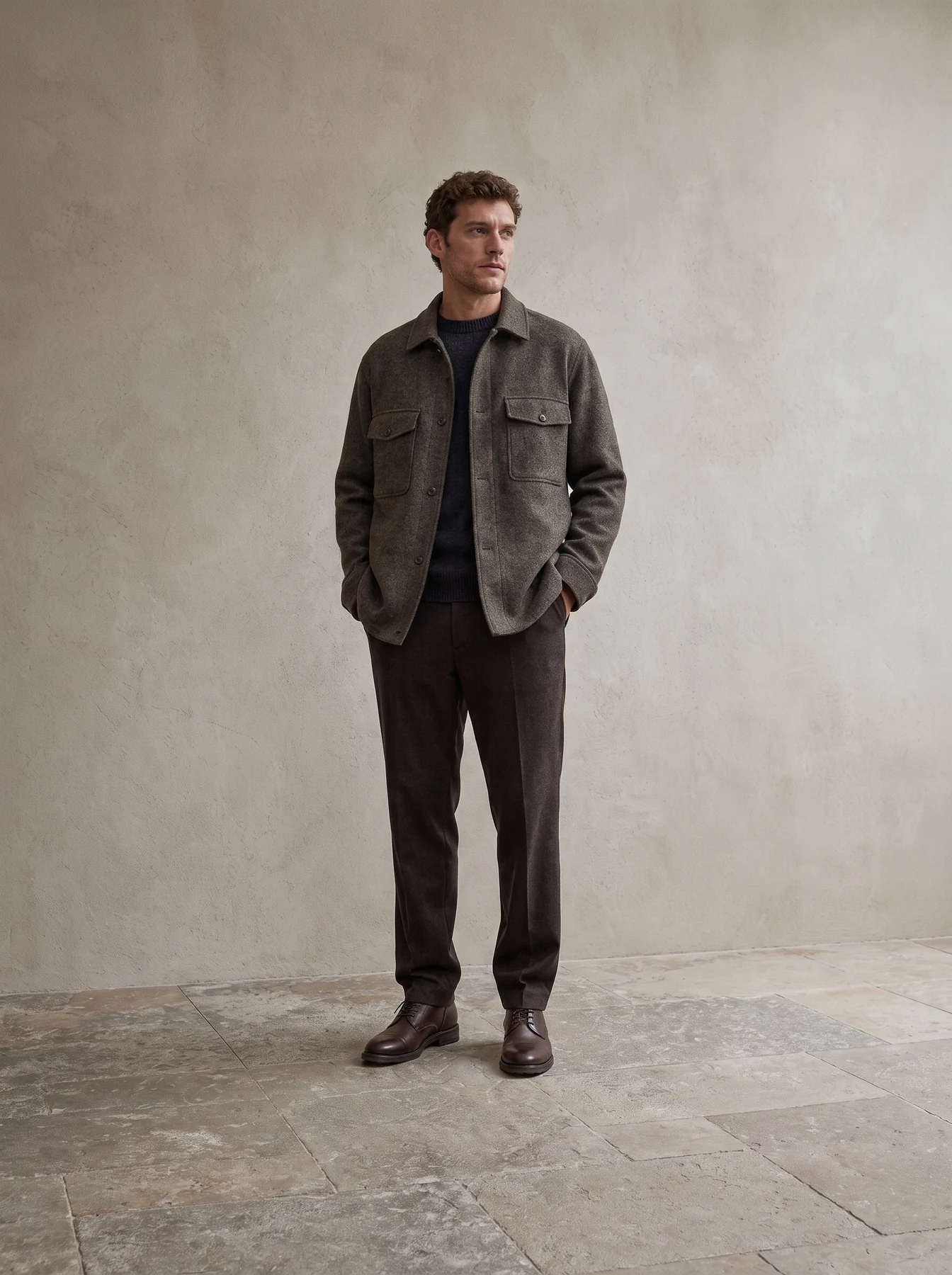
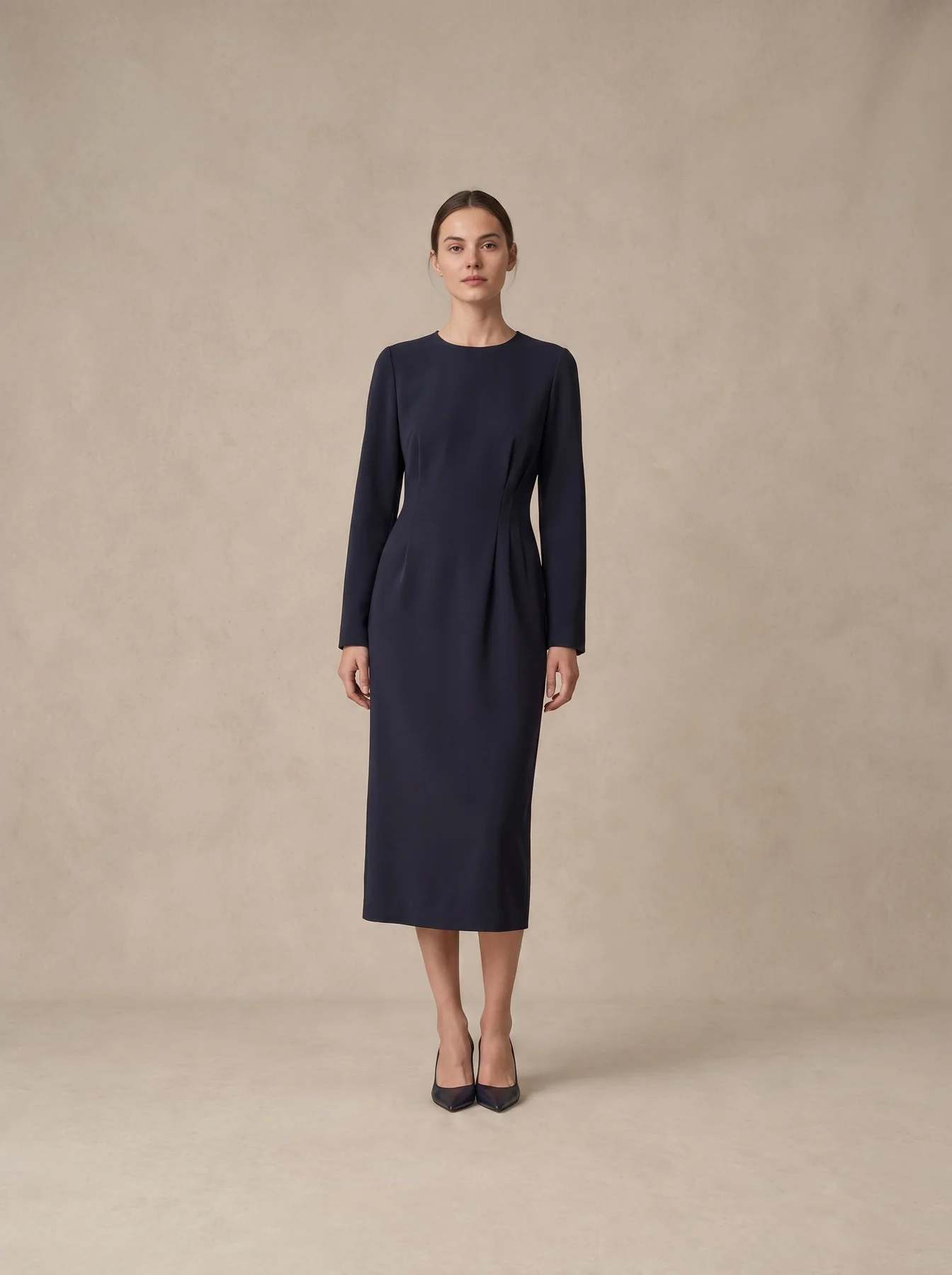
From material to wardrobe
Designed to be felt.
Cut to be understood.
Each image is an application study: a way for design and sourcing teams to see the cloth’s intended life before committing to a development.




05 / The proof
A story
you can inspect.
Every fabric order is supplied with the relevant AWTA Test Certificate(s) for the Australian wool used. The OCM batch allocation record connects those wool lots to the finished fabric; the material passport assembles the rest of the article evidence at the scope each record supports.
- Origin
- Australian wool purchase Documented
- Independent test
- AWTA Test Certificate Supplied with every fabric order
- Allocation
- Wool lot → production batch → fabric order OCM allocation record
- Welfare
- Non Mulesed source declaration Specified for the collection
- Composition
- Exact fibre percentages Article record
- Transformation
- Prepare · dye · blend · spin · construct · finish Production record
- Performance
- Tests relevant to the article claim Measured result
- Commercial
- MOQ · lead time · care · repeatability Buyer record
Certificate and lot identifiers appear only in the authorised buyer record. Nothing in the public journey fabricates a certificate number.

Arrival / Europe
From Amritsar.
Into the design room.
A distinct point of view, exact specifications and the ability to keep developing.

For material, design and sourcing teams
Begin with the hand.
Request the collection, specify an article or develop a cloth with our Amritsar team. Its origin can be documented, its construction specified and its value felt before the label is read.
- Specific application and sample offer
- Test data and material passport fields
- MOQ, lead time and development route